
Texas A&M researchers found that maropitant citrate, commonly known by the brand name Cerenia, reduced stomach and small-intestinal movement in healthy dogs without significantly changing intestinal size or wall thickness.
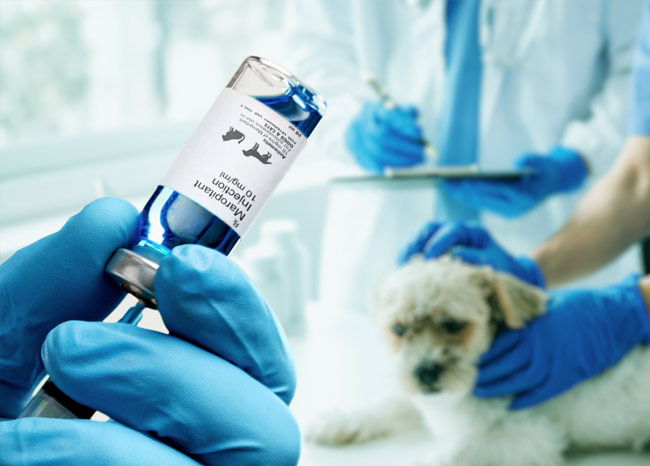
A medication commonly used to prevent vomiting in dogs and cats may temporarily slow portions of the gastrointestinal tract, according to a new study published in Veterinary Radiology & Ultrasound by researchers at Texas A&M University.
The study examined maropitant citrate, also known by the brand name Cerenia, a drug veterinarians frequently use to help control vomiting. Researchers wanted to better understand whether the medication could affect what veterinarians see on abdominal ultrasound or radiographs, commonly called X-rays, when evaluating a dog’s gastrointestinal tract.
The research team studied 21 healthy adult dogs between 1 and 8 years of age. Each dog received abdominal radiographs and a brief gastrointestinal ultrasound before receiving a standard subcutaneous dose of maropitant citrate. Imaging was then repeated one hour and three hours after the medication was given.
Researchers found that the medication significantly decreased the rate of movement, or peristalsis, in the pylorus — the area where the stomach empties into the small intestine — at both one and three hours after administration. Movement in the jejunum, a section of the small intestine, also decreased significantly one hour after the medication was given.
However, the study did not find significant changes in the thickness of the intestinal wall, the diameter of the intestine, or overall radiographic signs such as increased gas or fluid distention in the small intestine.
For veterinarians, the findings may help explain why some dogs that have received maropitant appear to have slower gastrointestinal movement during diagnostic imaging. This is important because reduced movement in the stomach or small intestine can sometimes resemble functional ileus, a condition in which the intestines slow down or stop moving normally.
The findings do not suggest that maropitant should be avoided when clinically appropriate. Instead, they highlight the importance of considering recent medication history when interpreting abdominal imaging results.
Because this study was conducted in healthy dogs after a single dose of maropitant, additional research would be needed to determine whether the same findings occur in sick dogs, hospitalized patients, or dogs receiving repeated doses.
The study, “Maropitant Citrate Administration Significantly Decreases the Rate of Peristalsis in the Stomach and Jejunum and Does Not Significantly Alter Intestinal Diameter or Intestinal Wall Thickness in Healthy Adult Dogs,” was authored by Jillian Myers, Andra Voges, Robert Werner and Nicola L. Ritter and published in Veterinary Radiology & Ultrasound.